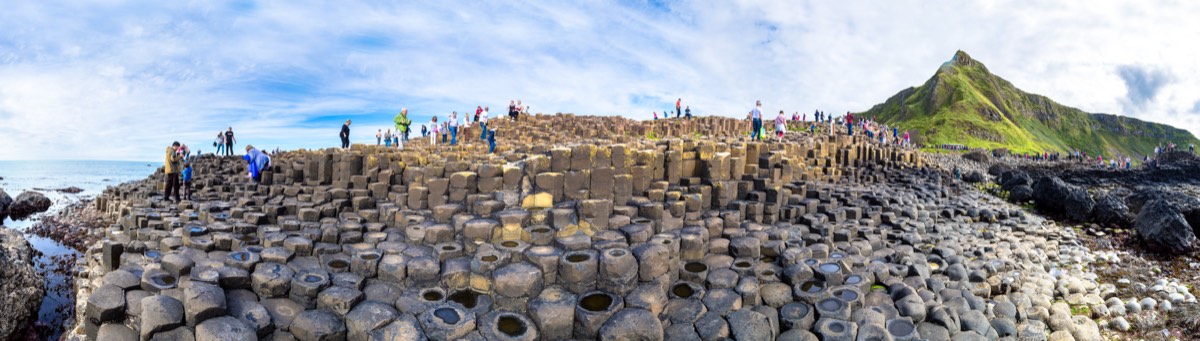
The Giant’s Causeway is a UNESCO World Heritage Site on the Antrim coast, about 9 miles from Portrush and 15 minutes from Bushmills. Over 40,000 interlocking hexagonal basalt columns, formed by volcanic activity roughly 50–60 million years ago as lava cooled and cracked into shape. Similar formations exist elsewhere in the world — Fingal’s Cave in Scotland, the Devil’s Postpile in the US — but nowhere else at this scale.
The legend
Local folklore credits the Causeway to Finn McCool (Fionn Mac Cumhaill), an Irish giant who built it to reach a Scottish rival, Benandonner. When Benandonner turned out to be even bigger than expected, Finn’s wife Oonagh disguised him as a baby in a cradle — Benandonner, reasoning that a father that size must be terrifying, fled home, tearing up the causeway behind him so Finn couldn’t follow.
Getting there
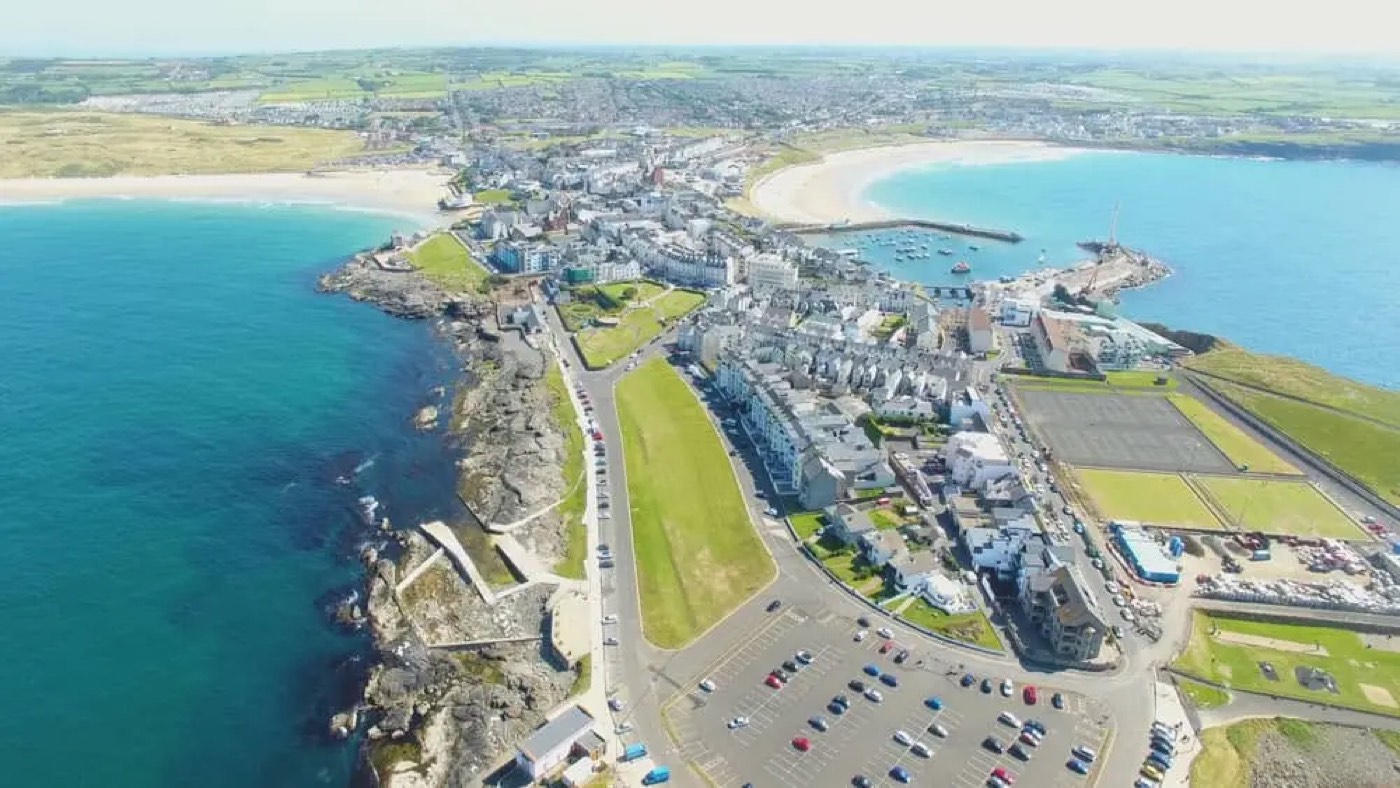
From Belfast: around 51 miles, about 1.5 hours by car (remember Northern Ireland drives on the left). Translink buses also run from Belfast to Bushmills. From Dublin: around 3 hours by car; day tours are also available. From Portrush/Bushmills: a short drive, or park at the Giant’s Causeway Railway station near Bushmills and take the narrow-gauge tram (about 20 minutes, roughly £5 adults/£3 children at time of writing) — parking there is free.
What it costs (and how to visit for free)
The Giant’s Causeway itself is free to visit — there’s no charge to walk on the stones. What you pay for is parking and the Visitor Centre. The Visitor Experience ticket (which includes parking, a guided tour, and audio guides) runs about £15 per adult booked online (£16 walk-up), £7.50–£8 per child, and £37.50–£40 for a family of 2 adults + up to 3 children — priced per person/family, not per car. Check National Trust’s current pricing before you go.
If you’d rather skip that fee entirely:
- Walk in from Portballintrae, following the coast path alongside the tram line and Bushfoot Golf Club, or along the train tracks from Bushmills.
- Park at the Giant’s Causeway Railway (Bushmills) for around £5 and walk down.
- The Nook, a pub right beside the Causeway, offers free parking if you ask (and does a good lunch by an open fire).
- National Trust membership gets you in free, along with Mussenden Temple, Portstewart Strand, and other Trust sites along the coast.
Don’t try to park on the Causeway Road itself — it’s actively enforced and you will likely get a ticket.
The Visitor Centre
Opened in 1986 alongside the UNESCO listing, destroyed by fire in 2000, and rebuilt as an award-winning new building that opened in July 2012. Open roughly 9am–5pm (parking stays open later). Toilets are here — there are none down at the Causeway itself. Wheelchairs and mobility scooters are available first-come, first-served, and audio guides (multiple languages) are included with a Visitor Experience ticket, alongside the four marked walking trails.
Trails
- Blue Trail — gentle, paved, direct from the Visitor Centre down to the stones. The easiest option and the one most people take.
- Red Trail — follows the cliff tops for the best views, then descends 162 steps to the rocks. More strenuous, worth it for the panorama.
- The Causeway also forms part of the long-distance Causeway Coast Way.
Once down at the stones, look out for the Organ (tall straight columns above Port Noffer resembling organ pipes), the Giant’s Boot, the Wishing Chair, and the Amphitheatre viewpoint with views to Rathlin Island.
When to go
Summer (June–August) is busiest — book ahead if that’s your only option. Spring and autumn give you decent weather with fewer crowds. It’s genuinely worth a winter visit too, if you don’t mind the cold: the Atlantic crashing against the rocks in January is its own kind of spectacular. Whatever the season, dress for wind — it’s noticeably colder and windier out past Hamilton’s Seat than it is back at the Visitor Centre.
Getting a guided tour
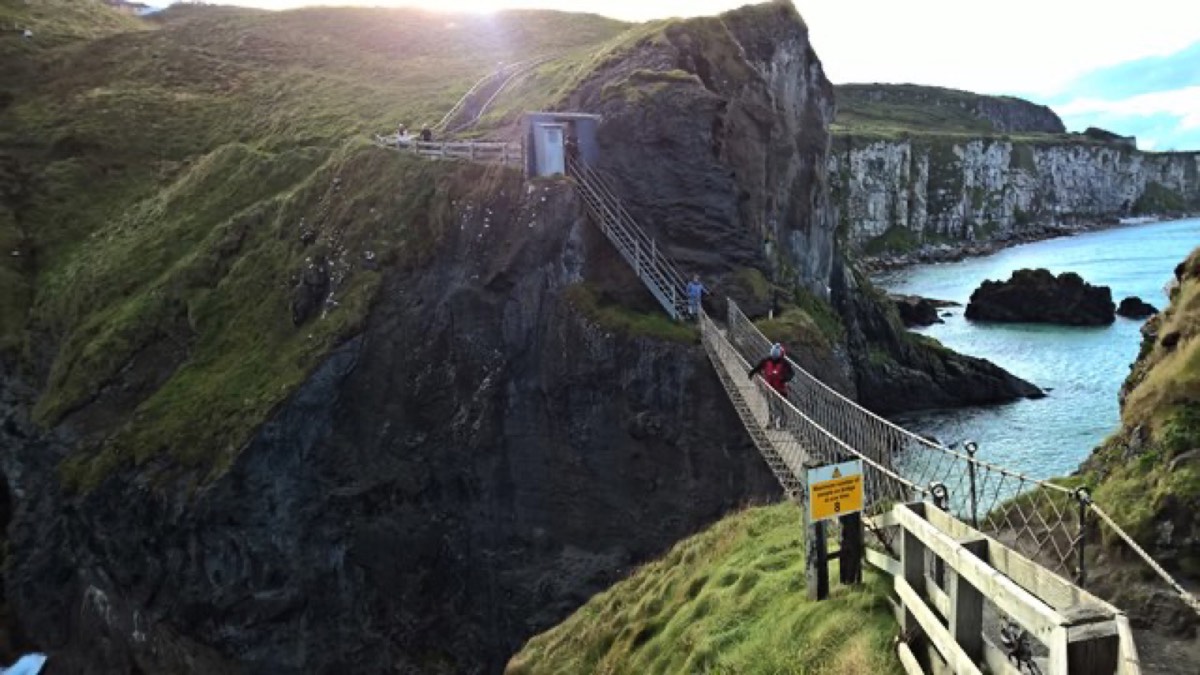
Guided day tours run from both Belfast and Dublin, typically combining the Causeway with Dunluce Castle, Carrick-a-Rede, and Old Bushmills Distillery. Expect a full day out (2–3 hours at the Causeway itself is typical), with basic bus tours starting around £25 per person and private or luxury options running considerably higher.
Check availability on Viator →
Staying nearby
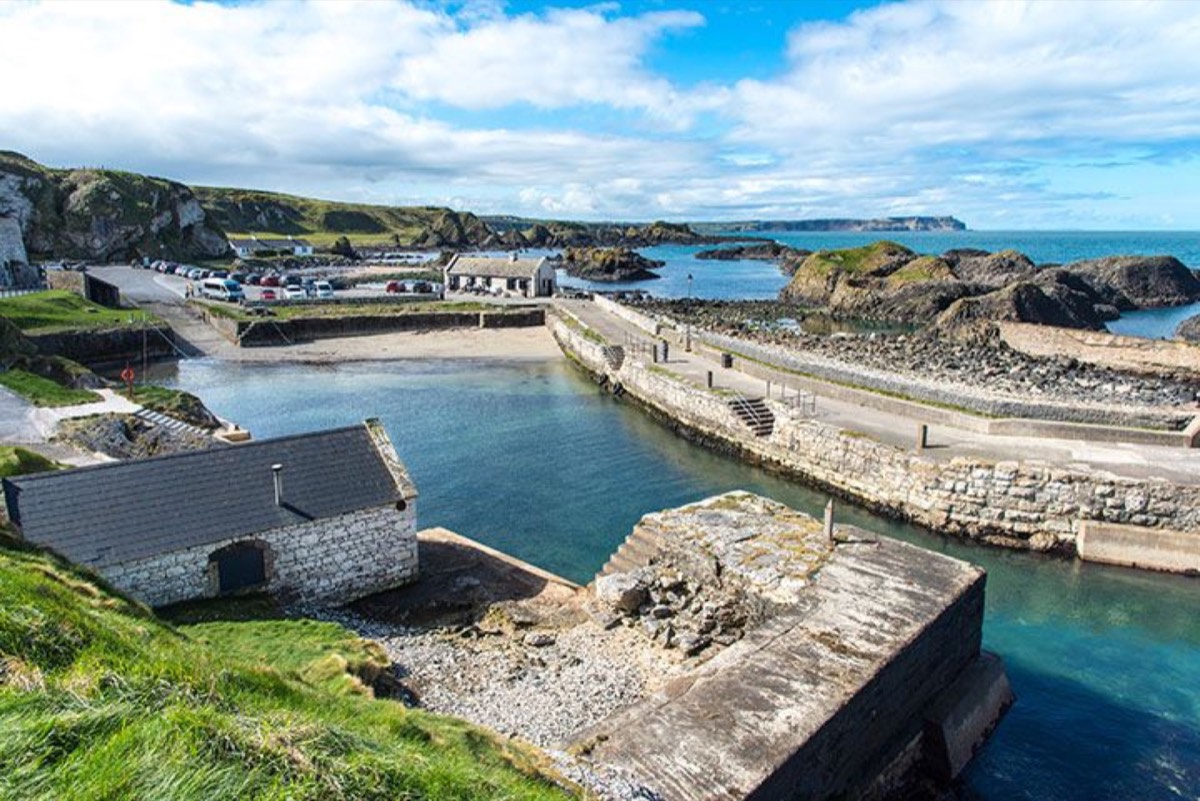
The Causeway Hotel sits right next to the Visitor Centre for the closest possible base. Otherwise B&Bs, cottages, and self-catering are available in Bushmills, Ballycastle, Portballintrae, Ballintoy, and Portrush/Portstewart, all a reasonable drive away. Book ahead in peak season.